

Planning a rural wedding means balancing natural beauty with thoughtful logistics so the day feels calm, polished and effortless for everyone involved. When those details are anticipated early, a countryside celebration delivers all the romance of wide-open views without the stress couples often fear. Here at Forest Edge, we draw on years of hosting weddings surrounded by fields, trees and open skies to share what couples don’t always see coming.
This guide is for couples planning a regional celebration, especially those searching for a wedding venue in Gembrook, who want the charm of a rural setting without leaving guest experience or practical details to chance. Rural venues come with unique considerations that can quietly shape how smoothly the day unfolds. Addressing these elements upfront is what separates a beautiful setting from a truly well-run wedding.
This article walks you through guest logistics, contingency planning, light and sound after dark, accessibility and the small but important decisions that turn a remote location into a welcoming, memorable celebration that feels intentionally designed rather than simply picturesque.
.webp)
Access, Transport and Guest Logistics
One of the biggest differences between city and rural weddings is how guests arrive and navigate the venue. In countryside settings, distance, road conditions, limited signage and mobile reception can all influence arrival times and overall guest experience. Clear planning ensures that guests arrive relaxed, on time and confident, rather than confused. When access is effortless, the day begins on a calm and positive note for everyone involved.
Transport logistics also shape how comfortably guests navigate the celebration from start to finish. Parking arrangements, shuttle services, walking distances, lighting after dark and clear directions all contribute to safety and ease of movement. These details become important for elderly guests, families with children and those unfamiliar with rural locations. Thoughtful transport and access planning ensure that every guest feels supported from arrival to departure.
Getting Guests to and From Remote Locations
Many of the weddings we host involve guests travelling from cities and regional centres to our forest setting, often with varying levels of confidence on rural roads. Directions are formatted to be easily copied into invitations, wedding websites or group messages, with clear landmarks and the final turn that is most commonly missed.
For guests travelling from further afield, work from a clear “rendezvous town” with a train station or coach stop, then plan transport from there. Depending on numbers and budget, this may involve minibuses on set schedules, a single coach or a combination of taxis and lift-sharing. When group transport is used, we help couples set realistic departure and return times based on the season, daylight hours and the actual travel time from town to our gates. This avoids delays, missed moments and the false confidence created by optimistic map estimates.
Parking, Accessibility and On-Site Movement
Parking is intentionally managed to protect the surrounding woodland and maintain safe access throughout the day. Ahead of each wedding, confirmation of expected vehicle numbers and suggestions to reduce congestion, such as car-sharing plans or central pick-up points. On the day itself, signages guide vehicles into designated areas, ensuring supplier access and emergency routes remain clear. This approach prevents bottlenecks and keeps arrivals calm and organised.
While the site is designed to feel natural and immersive, uneven ground can present challenges for some guests. It’s explained which paths are compacted and suitable for wheelchairs, pushchairs or reduced mobility. Also, which areas remain more rugged. Where required, there are local providers for all-terrain wheelchairs or small transport buggies. There’s also an extra time allowance in the running schedule for movement between the ceremony, drinks and reception spaces, ensuring no one feels rushed or excluded.
Accommodation Limits and Travel Timing
On-site accommodation is limited, so clear communication early in the planning process is essential. We work with couples to establish realistic sleeping arrangements that prioritise those who benefit most from staying on site. This includes considering the wedding party, families with young children and guests with mobility or health needs that make proximity important. Being upfront avoids awkward assumptions and last-minute disappointment.
Once accommodation numbers are confirmed, we plan travel and departure timing around them and help couples align the flow of the evening with transport needs, including:
- Guests staying on site versus those returning to local accommodation
- Early departures for families or older relatives
- Later transport for guests staying until the final moments of the celebration
Staggered, well-communicated departure windows prevent congestion and ensure guests can leave safely and comfortably. This allows the night to wind down naturally, without disrupting the relaxed forest atmosphere we work carefully to create.
Infrastructure, Power and Venue Limitations
Rural wedding venues operate differently from urban event spaces, particularly when it comes to infrastructure and services. Power availability, water supply, waste management and connectivity are often more limited and require deliberate planning. These constraints are not drawbacks, but they do shape how events must be designed and supported. When infrastructure is understood early, decisions around styling, catering and entertainment become clearer and more confident.
We plan celebrations with these realities in mind. Equipment load, power draw and supplier requirements are reviewed in advance to ensure everything functions smoothly from the ceremony through to the final moments of the evening. We also account for environmental conditions and site preservation, balancing operational needs with respect for the surrounding landscape. This approach allows couples to enjoy the setting fully, knowing the practical foundations of the day are secure.
Power Supply, Lighting and Equipment Needs
Rural venues rarely offer the same power capacity as city hotels or purpose-built function centres, which makes early assessment essential. Before entertainment, catering or speciality suppliers are confirmed, power availability must be clearly understood. Sound systems, commercial catering equipment, bar refrigeration, lighting and amenities all draw power simultaneously. Without planning, it is easy for combined demand to exceed what a rural switchboard can safely support.
As professionals, we assess power needs across all event zones, including ceremony areas, reception spaces, catering locations, bars and outdoor extensions. When additional supply is required, event-grade generators are specified, correctly sized and positioned to minimise noise disruption. Cabling routes, weather protection and refuelling access are also planned to ensure uninterrupted operation. Functional lighting is treated as a safety requirement first, then layered with decorative lighting so pathways, steps, amenities and parking remain visible once darkness falls.
What Rural Venues Provide vs. What You Must Arrange
Every rural venue offers a different level of built-in infrastructure, and assumptions can quickly lead to gaps in planning. Some locations include upgraded power, permanent amenities, commercial kitchens and fixed lighting, while others provide only basic domestic services. Understanding what exists on site is critical before locking in suppliers or styling plans. Clear boundaries prevent last-minute hires and unexpected costs.
We outline exactly where venue provisions end and where external arrangements begin. If commercial kitchen facilities are unavailable, catering teams must supply their own equipment and preparation spaces. Where amenities are limited, additional portable facilities may be required, including accessible options and adequate lighting. Requesting a detailed inclusions list early allows suppliers to quote accurately and ensures the event design remains realistic and well coordinated.
Setup, Pack-Down and Supplier Access Rules
In rural settings, setup and pack-down are shaped by access conditions, local regulations and the physical realities of the landscape. Travel times can be longer due to unsealed roads, narrow entrances, livestock gates or limited turning space for large vehicles. Suppliers often need structured arrival windows rather than flexible, last-minute access. These constraints influence scheduling for setup and event flow.
We coordinate detailed access plans covering arrival times, designated entry points, parking zones and operational limits for music and generators. Local council noise curfews and neighbouring properties are factored into entertainment and bar service timelines. Pack-down is planned with equal care, including swaste management responsibilities and next-day access conditions where permitted. When these details are defined upfront, the event concludes smoothly, and the site is restored without placing unexpected pressure on couples or their families.
Weather, Ground Conditions and Contingency Planning
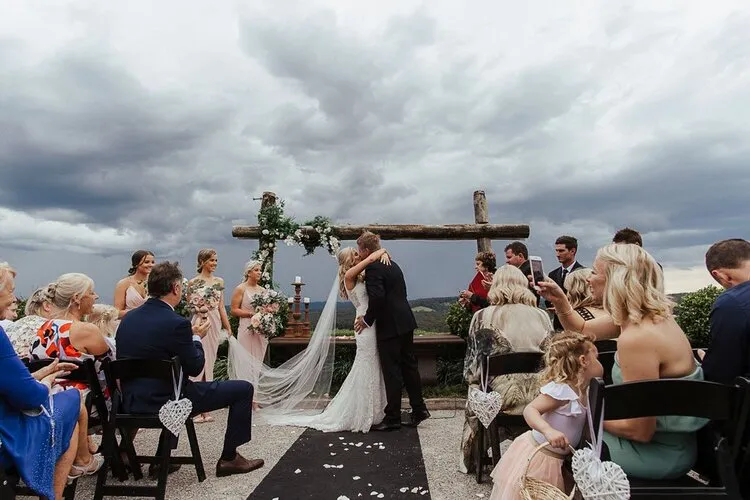
Weather plays a far more visible role in rural weddings than it does in enclosed, urban venues. Open landscapes, natural surfaces and limited shelter mean conditions such as rain, wind, heat or sudden temperature drops can affect comfort and logistics. Rather than reacting on the day, successful countryside celebrations are built around flexibility from the outset. When weather planning is integrated early, it becomes part of the design rather than a disruption.
Seasonal patterns, drainage, soil stability and prevailing winds are assessed alongside layout and styling decisions. We develop contingency plans that preserve the look and flow of the celebration while protecting guests, suppliers and the site itself. This preparation allows couples to remain confident and present, knowing the day can adapt smoothly no matter what the forecast brings.
Wind, Heat and Sudden Weather Changes
Rural settings are beautiful because they are open and exposed, but this also means the weather has a stronger influence on the flow of the day. Even in peak summer, conditions can shift quickly, and wind is often the most underestimated factor. Gusts can disrupt ceremonies, affect sound quality and unsettle lightweight décor if it is not properly secured. For outdoor gatherings, microphones, weighted furniture and low-profile styling elements are essential for maintaining calm and clarity.
Heat presents its own challenges, particularly in open landscapes with limited natural shade. Long ceremonies or extended drinks receptions in direct sunlight can quickly become uncomfortable for guests of all ages. We plan ceremony timing, shaded areas and hydration stations carefully to maintain comfort without losing the rural atmosphere. Flexible layouts also allow quick adjustments if cloud cover, wind direction or temperature changes unexpectedly as guests arrive.
Wet Ground, Footwear and Furniture Stability
Natural ground conditions are rarely as firm as they appear in photographs, especially after rainfall. Grass, soil and woodland edges can become slippery or uneven, creating challenges for guests and event infrastructure. We assess the full guest journey in advance, including arrival routes, ceremony areas and pathways between spaces. Where softness or instability is likely, matting, temporary flooring or layout adjustments are planned.
Guest footwear and furniture stability require equal consideration in rural environments. Couples are encouraged to advise guests that they will be walking on grass or natural surfaces so footwear choices are appropriate. Small additions such as heel protectors or spare flat shoes can improve comfort and safety. Furniture, arches and décor are tested on site and discreetly stabilised where needed to prevent movement or tipping during the event.
Backup Plans That Keep the Day Running Smoothly
In rural weddings, contingency planning is a core design element rather than an optional extra. Weather changes are addressed by creating a clearly defined alternative that feels intentional, cohesive and aligned with the overall vision. Rather than treating Plan B as a downgrade, both versions of the day are designed to feel equally considered. This approach removes pressure and allows decisions to be made calmly.
We ensure every supplier understands the contingency plan before arriving on site. Backup planning typically includes:
- A covered or indoor ceremony option that mirrors the primary layout
- Alternative locations for drinks, photographs and guest gathering
- Lighting plans that work in overcast or low-light conditions
- A clear decision time for activating Plan B
By aligning décor, signage and layouts across different options, any transition feels seamless to guests. The result is a celebration that continues smoothly, regardless of weather, without compromising atmosphere or experience.
In the end, planning a rural wedding is about designing the experience around the realities of the landscape, not simply moving a city-style event outdoors. When infrastructure, access, weather planning, suppliers and guest comfort are considered early, the countryside becomes an asset rather than a challenge. The result is a celebration that feels calm, intentional and beautifully in sync with its surroundings. At Forest Edge, we specialise in guiding couples through these details so they can enjoy a seamless, atmospheric day.