

Choosing between a seated wedding reception and a cocktail-style celebration can shape the entire feel of a wedding day. It affects how guests eat, move, mingle, listen to speeches and enjoy the venue. A seated reception can create a more formal and structured experience, while a cocktail reception often feels relaxed, social and flexible. For couples planning their celebration at a wedding venue in Gembrook such as Forest Edge, understanding these differences early can make it easier to choose a format that suits the venue, the guest list and the atmosphere they want to create.
Forest Edge explores the key differences between seated and cocktail-style wedding receptions, including guest comfort, catering, timing, venue layout and overall flow. By comparing how each option works in real wedding settings, couples can choose a reception style that feels practical, enjoyable and aligned with the kind of celebration they want guests to remember.
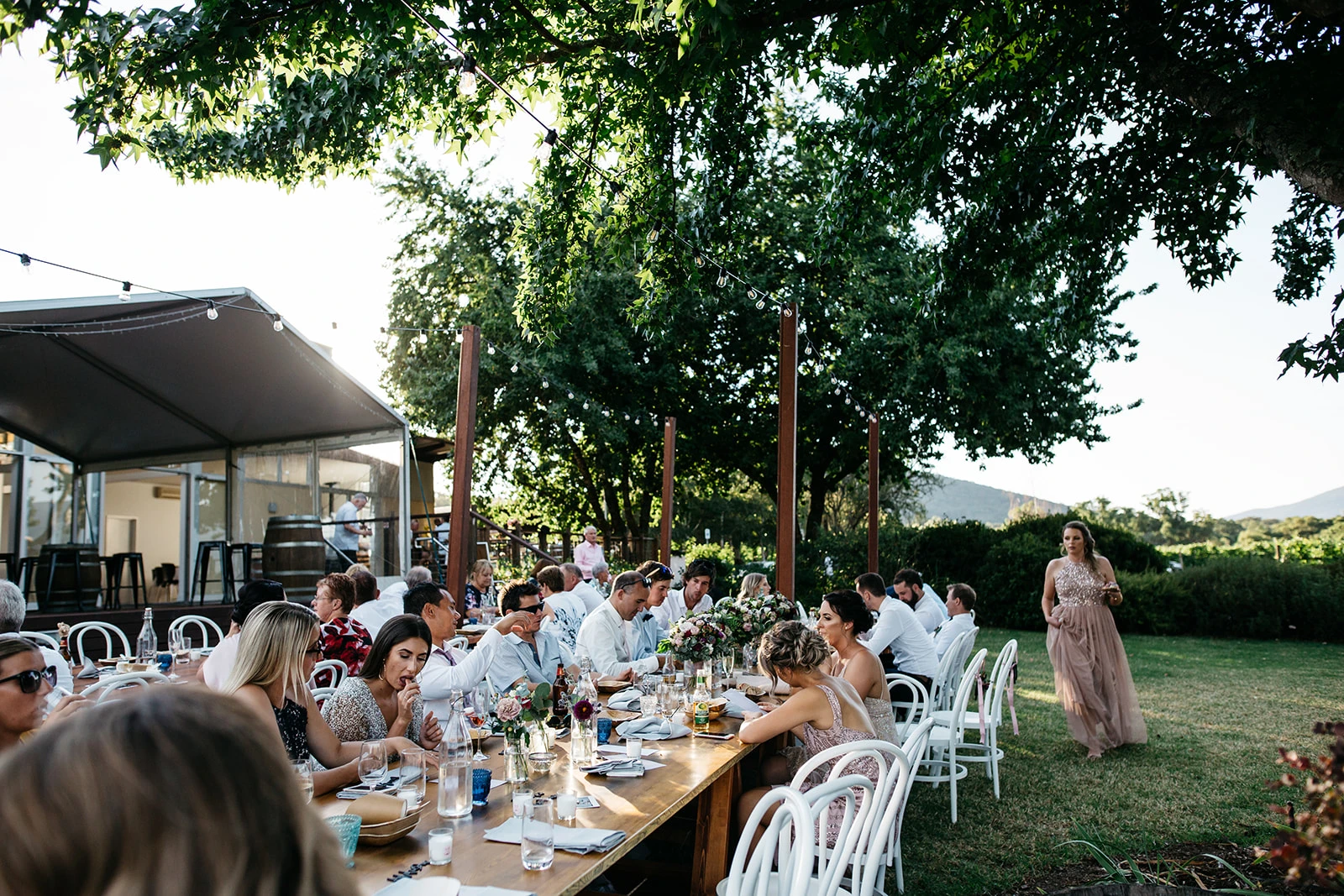
Seated vs Cocktail Receptions: The Main Difference
The central difference between a seated and cocktail wedding reception is how guests eat, move and experience the event. A seated reception is built around a full meal served to guests at assigned tables. A cocktail reception focuses more on mingling, with substantial canapés, grazing stations or food stations replacing a traditional sit-down meal.
This choice affects much more than the menu. It influences the atmosphere, timing, floor plan, budget and level of structure throughout the celebration. A seated reception usually feels more formal and organised, while a cocktail reception often feels more relaxed, social and flexible. Understanding how each format works in practice makes it easier to decide which one suits the wedding vision.
Guest Experience and Atmosphere
A seated reception creates a more traditional dining experience. Guests have allocated seats, usually with a seating plan, and the evening follows a clear structure. Entrée, main and dessert may be served in courses, with speeches and formalities often placed between each stage of the meal. This format gives the reception a sense of occasion and makes it easier for guests to settle in, relax and follow the flow of the night.
The main benefit of a seated reception is comfort and predictability. Guests know where to sit, meals are served directly to the table and older relatives or guests with mobility needs are not expected to stand for long periods. Conversation tends to happen mostly within each table, which can encourage deeper interaction with nearby family and friends, though guests may speak to fewer people overall.
A cocktail reception creates a livelier and more social atmosphere. Guests are encouraged to move around the space, visit the bar, enjoy food as it is served and mingle with different groups throughout the event. This style works well for couples who want their reception to feel like an elegant celebration with energy and movement, rather than a formal dinner where guests remain seated for most of the night.
Because guests are not fixed to one table, a cocktail reception can help friends from different parts of life meet more naturally. The energy often builds earlier, with dancing and socialising beginning sooner than it might during a structured seated meal. However, this format still needs thoughtful planning. Guests should have enough places to sit, set down drinks and comfortably eat without feeling like they are standing all night.
Food Service and Timing
In a seated reception, the meal is usually the anchor of the evening. Service follows a clear timeline, with guests called to their seats before courses are delivered to the table. Meals may be plated individually, served as alternate drop or presented as shared feasting-style dishes. This structure makes portion sizes predictable and allows dietary requirements to be managed more easily.
A seated meal also creates natural pauses for speeches, cake cutting and other formalities. Guests are already seated and facing the front, which helps keep attention focused. The trade-off is that the evening can feel slower while courses are served and cleared, especially if speeches are long or the meal service takes up a large portion of the reception.
In a cocktail reception, food is served in smaller portions over a longer period. This may include roaming canapés, grazing tables, food stations or more substantial items such as sliders, skewers, mini bowls or late-night bites. This format suits couples who want fewer gaps in the schedule and a quicker transition into dancing and socialising.
The most important consideration with cocktail catering is quantity. A cocktail reception should not feel like light snacks replacing dinner. Guests need enough substantial food to feel satisfied, especially if drinks are being served over several hours. A well-planned cocktail menu usually includes a steady flow of canapés, filling options and enough variety for different dietary needs.
Seating, Comfort and Accessibility
Guest comfort should be one of the biggest factors when choosing a reception style. A seated reception offers the most certainty because every guest has an assigned chair and table. This can be particularly helpful for elderly relatives, pregnant guests, families with young children or anyone who may struggle to stand for extended periods.
Seated receptions also make it easier for guests to eat comfortably, store personal items and follow formalities without needing to move around the room. For longer weddings, cooler weather or more traditional family celebrations, this format can feel calmer and more practical.
A cocktail reception offers more freedom of movement, but it still needs adequate seating. A cocktail-style wedding should never mean no seating at all. A good layout usually includes lounges, bar stools, small tables and quieter seating areas so guests can rest when needed. As a guide, providing seating for at least half the guest list can help keep the space comfortable without removing the relaxed cocktail feel.
Movement also needs to be planned carefully. Clear pathways between the bar, food stations, dance floor and seating areas help guests move naturally without crowding. Small cocktail tables or resting points for glasses and plates also make it easier for guests to eat and drink while mingling.
Both formats benefit from a balance of active and quiet zones. For example, a cocktail reception can include a comfortable lounge area away from the speakers, while a seated reception can encourage movement through a dessert station, outdoor area or photo spot. The goal is to make guests feel comfortable while still allowing the celebration to flow naturally.
Speeches, Dancing and Reception Flow
A seated reception naturally supports a more structured run sheet. Speeches usually take place between courses or after the main meal while guests are already seated. This works well for couples who want traditional speeches from parents, the bridal party and the couple themselves. It also makes it easier for photographers and videographers to capture reactions, as guests are gathered in one place.
In a cocktail reception, speeches can still work well, but they should usually be shorter and more focused. Because guests may be standing or spread across different areas, long speeches can interrupt the relaxed atmosphere. A clear focal point is important, such as the dance floor, a raised area or a central section of the room. Food service should also pause briefly so attention is not split between speakers and catering staff.
For both reception styles, it is useful to:
- Test microphones and audio equipment before formalities begin
- Brief speakers on where to stand
- Set clear time limits for speeches
- Decide whether speeches will happen together or be broken up throughout the evening
Dancing also changes depending on the format. In a seated reception, the first dance often happens after speeches, cake cutting or dessert, marking the shift from formal dining to the party portion of the night. Guests move from their tables to the dance floor and can return to their seats between songs.
In a cocktail reception, the dance floor can open earlier because there is no long sit-down meal controlling the schedule. Shorter formalities, continuous food service and a more relaxed layout can help the evening feel energetic from the beginning. This works especially well for couples who want music, dancing and mingling to be a major part of the celebration.
In either style, formalities should not be left too late. If speeches, cake cutting and the first dance happen close to the end of the night, guests may have little time left to enjoy the party. Planning formalities to finish well before the final hour usually creates a better balance between structure and celebration.
Budget, Staffing and Venue Considerations
Budget is another important factor, but cocktail receptions are not automatically cheaper than seated receptions. The final cost depends on the guest count, menu, staffing needs, furniture hire, décor and how the venue is used.
A seated reception often involves higher costs for table settings, linen, centrepieces, crockery, cutlery and formal service. Plated multi-course meals can also require more kitchen preparation and precise timing. If every table is styled with florals, candles, stationery or upgraded place settings, the décor cost can increase quickly.
A cocktail reception may reduce some furniture and table styling costs because full dining tables are not needed for every guest. However, the food still needs to be generous. High-quality canapés, grazing stations and substantial bites can cost as much as, or sometimes more than, a simpler plated meal. If couples add extra food stations later in the planning process to make the menu feel more filling, any expected savings can disappear.
Staffing requirements also differ. Seated receptions need enough waitstaff to deliver and clear meals efficiently across multiple tables. Cocktail receptions need roaming staff who can move through the space consistently so all guests have access to food. If the venue is large or spread across indoor and outdoor areas, extra staff may be needed to prevent some guests from missing out.
Bar service should also be considered. Cocktail receptions often have more guests moving around the room, which can increase pressure on the bar. Additional bar staff or a secondary bar may help reduce queues and keep the event flowing smoothly.
Venue layout can be the deciding factor. A seated reception requires enough floor space for tables, chairs, service aisles and a dance floor. A cocktail reception can use space more flexibly, with lounge areas, high tables, food stations and standing zones spread across the venue. This can suit venues with scenic outlooks, garden areas or multiple adjoining spaces.
Accessibility should always be part of the decision. Even if a venue can technically hold more guests in a cocktail layout, it still needs enough seating, clear pathways, easy bathroom access and comfortable areas for guests who need to rest.
How to Choose the Right Reception Style for Your Wedding
The right reception style depends on the atmosphere couples want to create, the needs of their guest list, the catering experience they prefer and how they want the evening to flow from arrival to the final dance. Rather than choosing based only on current trends, couples should think carefully about how guests will experience the celebration throughout the night.
A seated reception may be the better choice if the guest list includes many older relatives, families with children or guests who prefer a more traditional structure. It also suits couples who want a formal meal, styled tables, longer speeches and a clear run sheet.
A cocktail reception may be the better choice if the couple wants a relaxed, social and energetic atmosphere. It suits guest lists that enjoy mingling, dancing early and moving between different areas of the venue. It can also work well in spaces with outdoor areas, scenic views or flexible layouts.
Food style should also guide the decision. Couples who want a multi-course meal or shared feast may prefer a seated reception. Couples who want variety, grazing stations and continuous service may prefer a cocktail format. In either case, the menu needs to feel complete and satisfying.
Venue layout is equally important. A long, narrow room may work better with seated tables, while an open-plan space or garden venue may suit a cocktail layout. Couples who value detailed tablescapes, place cards and formal styling may lean towards seated dining, while those who want more dance space and movement may prefer cocktails.
Choosing between a seated and cocktail wedding reception comes down to the kind of experience couples want to create at Forest Edge. A seated reception offers comfort, structure and a more traditional dining experience, making it well suited to formal celebrations, longer speeches and guests who appreciate having an assigned place to sit. A cocktail reception creates a more relaxed and social atmosphere, with greater freedom for guests to move, mingle and enjoy different parts of the venue.
At Forest Edge, both seated and cocktail receptions can be shaped around the couple’s vision, the guest list and the way they want people to enjoy the venue throughout the day. The best choice is the one that supports the couple’s vision while keeping guests comfortable, well fed and engaged throughout the celebration.